Online Continuing Education
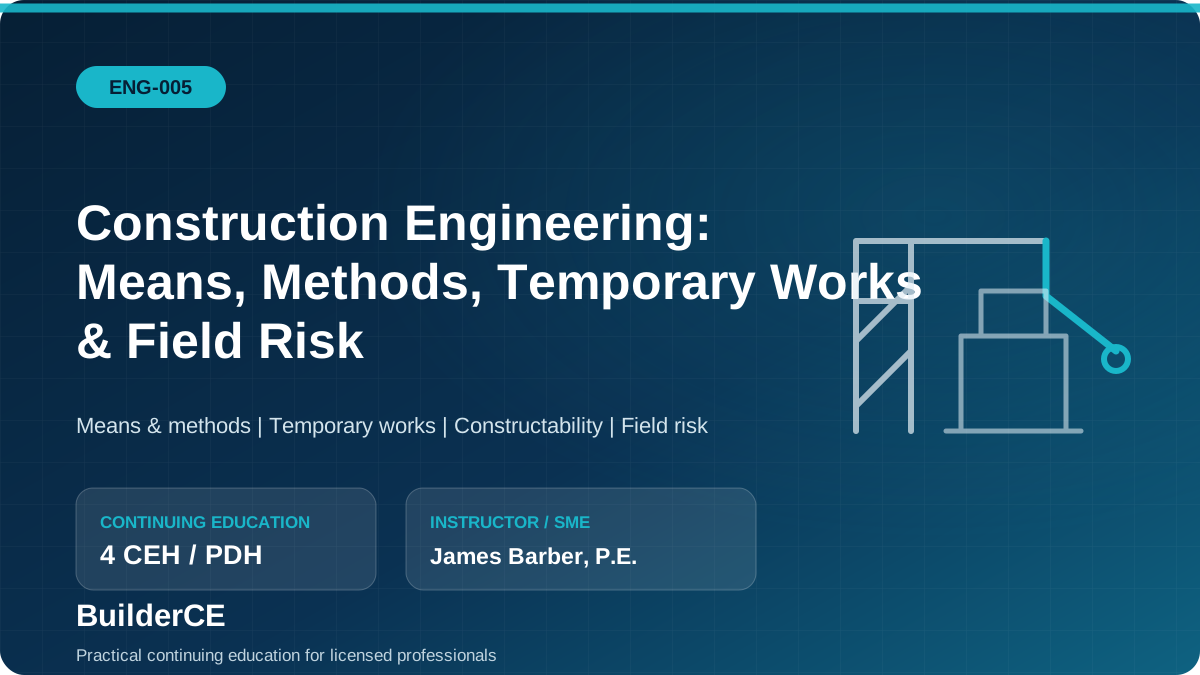
Construction Engineering: Means, Methods, Temporary Works & Field Risk
A 4 CEH/PDH civil construction course on construction-stage load paths, means and methods, temporary works, sequencing, lifting, field changes, failure precursors, hold points, and technical risk control.
4 CEH/PDH
E-book
Online
Course # ENG-005
Pertinent to Engineering / Civil Engineering Practice
4 CEH/PDH
Continuing education credit
E-book
Learn on your schedule
Certificate Included
Available after completion
Reporting
Where available
Does this course fit my requirement?
Profession
Professional Engineer
Credit
4 CEH/PDH
Category
Pertinent to Engineering / Civil Engineering Practice
State eligibility
Required CE: Florida
Florida PE provider credential:
Florida Board of Professional Engineers (FBPE) · Provider #0010920 · current through May 31, 2027.
Provider status is separate from individual course approval. Course-specific approval is identified separately when applicable.
View & independently verify
Florida: Pass the 10-question final examination with a score of at least 70%. Retakes are permitted until passed.
What You'll Learn
A 4 CEH/PDH civil construction course on construction-stage load paths, means and methods, temporary works, sequencing, lifting, field changes, failure precursors, hold points, and technical risk control.
- Pertinent to Engineering / Civil Engineering Practice
Course Outline
- 01Construction Engineering: Means, Methods, Temporary Works & Field Risk
About This Course
Construction projects pass through temporary states that can create load paths, support conditions, stability demands, and field risks that do not exist in the finished structure. This 4-CEH course develops a practical construction-engineering framework for recognizing those conditions and defining the technical responsibility needed to manage them.
Learners examine permanent-design responsibility versus contractor means and methods; construction sequencing and intermediate load paths; formwork, shoring, reshoring, falsework, scaffolds, excavation support and bracing; lifting and erection stability; demolition sequence; RFIs, substitutions and field changes; delegated design; failure precursors; hold points; verification; monitoring; and communication controls.
The course concludes with a 10-question multiple-choice final examination. A score of 70% is required to pass, and retakes are permitted until passed.

Course Expert
James Barber, P.E.
Civil & Transportation Engineering, Roadway Design & Infrastructure Leadership
James Barber is a Florida-licensed Professional Engineer and transportation infrastructure leader with professional experience dating to 2006. As Tampa Infrastructure / Highway Group Lead and Project Manager, he leads complex roadway, interchange, bridge, complete-streets, resurfacing, and multidisciplinary assignments for FDOT and local agencies.
Roadway DesignTransportation EngineeringFDOT ProjectsProject Management
Meet James Barber, P.E.
What's Included
Online course access
Certificate of completion
Progress saved
Mobile friendly
Reporting where available
Compliance & Approval Information
Course staged in BuilderCE pending final administrative and regulatory launch review. It remains disabled and is not available for purchase until explicitly enabled.
$15.00